

Description:
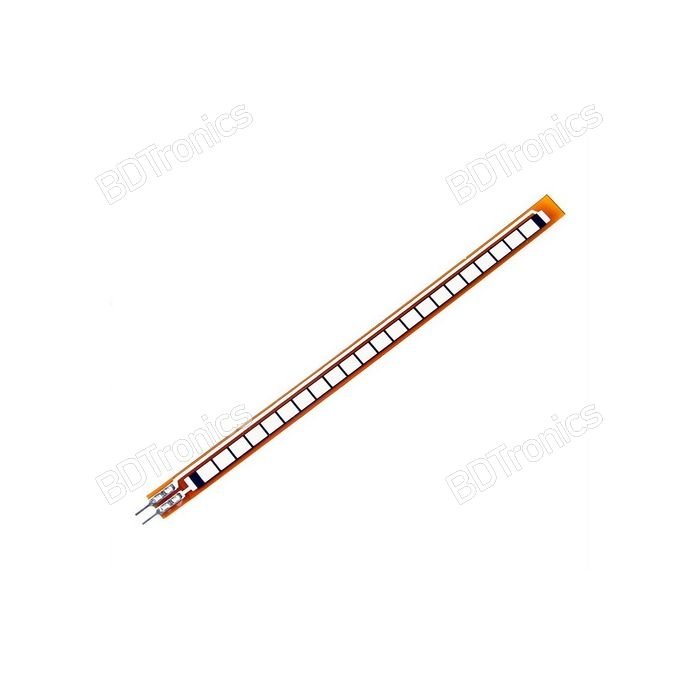
A flex sensor 4.5, also known as a 4.5-inch flex sensor, is a type of electronic component used to measure and detect the degree of bending or flexing in a physical object. It is typically used in various applications, such as robotics, wearable devices, medical instruments, and industrial automation. The flex sensor 4.5 consists of a thin, flexible strip made of a conductive material, such as carbon or copper. This strip is designed to change its resistance when bent or flexed. The sensor is usually mounted on a substrate or a backing material, which provides support and protection. When the flex sensor is in its neutral or unbent state, it has a specific resistance value. As the sensor is bent, its resistance changes proportionally. The resistance can increase or decrease depending on the design and material of the sensor. This change in resistance is typically measured and used to determine the degree of bending or flexing. Flex sensors often have conductive tracks or pads at both ends, allowing them to be easily connected to other electronic components or microcontrollers. By integrating the flex sensor into a circuit, the resistance change can be measured and converted into useful data or control signals. The flex sensor 4.5 is named based on its length, indicating that it is 4.5 inches long. The length of the sensor determines its range of flexibility and the area over which it can detect bending. Other variations of flex sensors with different lengths are also available in the market to cater to different applications and requirements. Overall, the flex sensor 4.5 is a versatile component that enables the detection and measurement of bending or flexing in various electronic and mechanical systems, providing valuable input for control, feedback, or monitoring purposes.
Specification:
a flex sensor is a type of sensor that measures the amount of bending or flexing applied to it. It consists of a flexible with conductive traces that change resistance as the sensor bends. This change in resistance can be used to determine the degree of flexion or bending.